
Popping Sound in Knee: Is it an ACL Tear? 7 Urgent Signs & Symptoms to Watch Out For
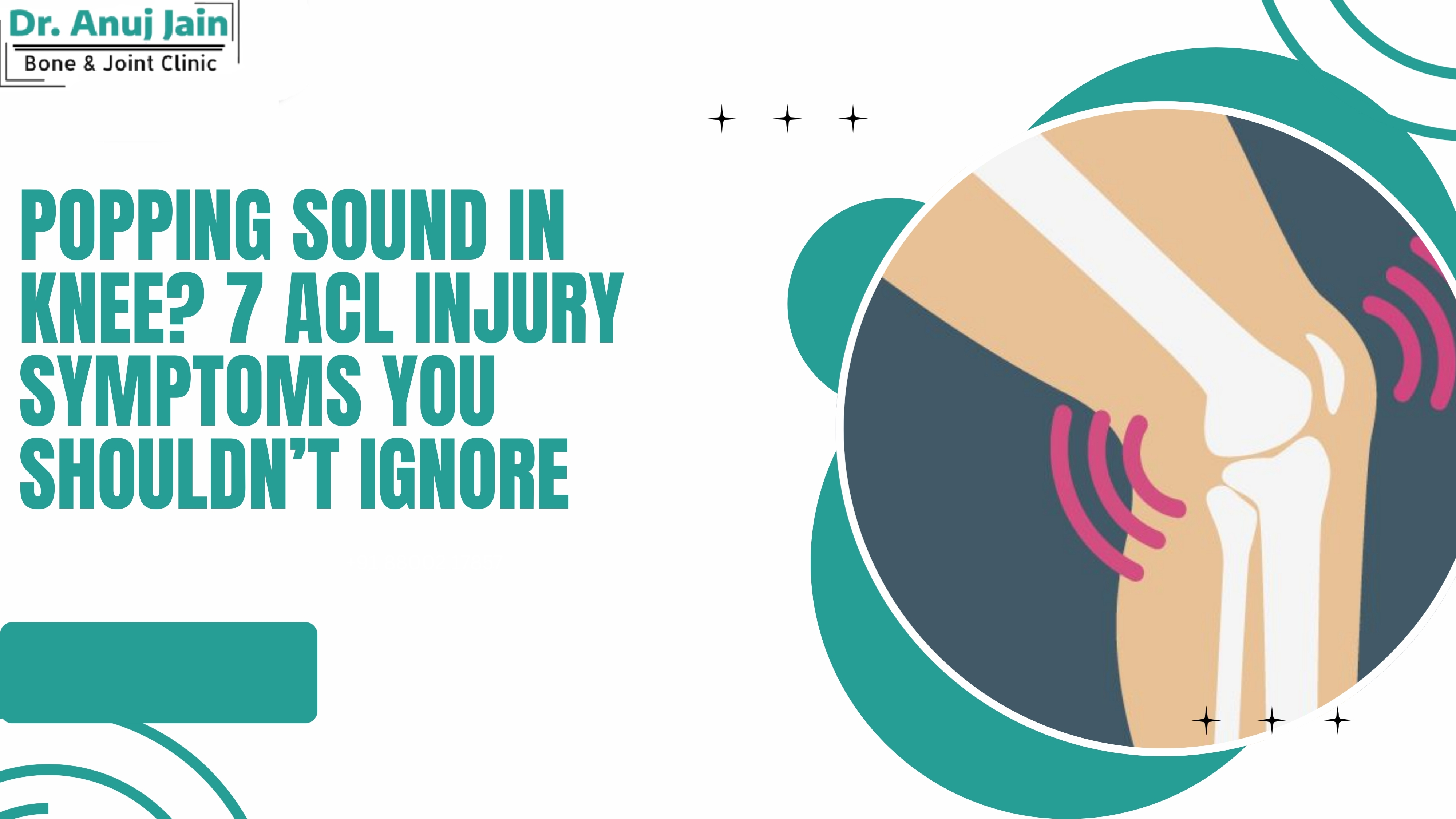
It sometimes just happens all of a sudden. You are playing a game, stepping awkwardly or suddenly changing direction; you hear a pop from somewhere in the knee. The next moment nothing but chaos follows, along with an explosion of pain and the burning question: Was it serious? Have I torn something?
Most people will tell you that their immediate fear after hearing the pop is of tearing the anterior cruciate ligament. The anterior cruciate ligament is one of the major stabilizing ligaments of the knee joint. An anterior cruciate ligament injury will allow the knee joint to be an unstable mechanism for the remaining portion of the cycle.
In this article, leading orthopedic surgeon Dr. Anuj Jain, who regularly treats ACL injuries and sports injuries, discusses the vital signs of an ACL injury , other early warning signs, and when there is a need to see a physician whenever knee pain occurs before it becomes a full-blown issue.
What Does an ACL Tear Pop Sound or Feel Like?

Patients frequently describe an ACL tear as a distinct, loud pop, nearly like something snapped or shifted inside the knee. Some don’t listen to it sincerely but sense something providing manner all of a sudden.
This may be very different from innocent joint cracking, which typically takes place without ache or swelling. A regarding pop commonly takes place during unexpected stops, twisting actions, leaping, or direct impact—situations normally visible all through sports activities or rapid-paced hobbies. Pain and swelling normally follow soon after, on occasion within minutes.
The 7 Urgent ACL Injury Symptoms to Watch Out For
1. Immediate Severe Pain
The clearest signs of an ACL tear are sudden and sharp pain at the time of injury. This pain is often deep within the knee and intense enough to immediately stop activity. Pain that strikes right after a popping sound should never be ignored.
2. Rapid Swelling Within Hours
Swelling caused by bleeding inside the joint usually appears quickly — often within 2 to 6 hours. The knee may look visibly larger or feel tight and stiff. Rapid swelling is one of the most important ACL injury symptoms doctors assess.
3. Inability to Bear Weight
For many people, after an ACL tear, it becomes extremely difficult to bear weight or walk. The knee may feel weak, unstable, or incapable of supporting full body weight, which is often a sign of internal structural damage.
4. Loss of Range of Motion
Swelling and pain following the injury can limit the ability to fully bend or straighten the knee. Patients frequently describe the knee as feeling “stuck” or unusually stiff during movement.
5. Feeling of Instability or “Giving Way”
A classic symptom of ACL injury is the sensation that the knee may give way. This often occurs while walking on uneven surfaces, making sudden turns, or going up or down stairs. Knee instability is a strong indicator of ACL damage.
6. Tenderness Along the Joint Line
Pain along the sides or center of the knee joint may suggest associated injuries, such as meniscus damage. ACL tears often occur alongside other internal injuries, and joint-line tenderness helps doctors identify combined damage.
7. Visible Bruising
Bruising may develop 24 to 48 hours after the injury as blood spreads beneath the skin. While bruising alone does not confirm an ACL tear, it raises suspicion when seen alongside other symptoms.
When to See a Doctor for Knee Pain — URGENTLY
One must get immediate medical attention for a knee popping sound accompanied by excessive pain, sudden swelling, difficulty in walking, or repeated knee buckling. These are robust ACL tear symptoms that require evaluation.
Delaying treatment may result in recurrent instability in the injury or recurrence of the injury itself, and in a few cases can result in early arthritis. The assessment requires a proper physical examination and an imaging study such as MRI. Dr. Anuj Jain follows a systematic approach to diagnose ACL injury whether these symptoms are present or absent, and also how to correlate them to the patient based upon the right treatment plan.
Immediate Steps to Take
The RICE approach, which refers to Rest, Ice, Compression, and Elevation therapy is the first intervention protocol once an ACL injuryACL is suspected. Avoid any sports activities, such as running or testing the strength of the involved knee. The greater the pain, the greater the aggravation. Decisive actions include making an appointment with an orthopedic physician.
Frequently Asked Questions (FAQs)
1. Can you walk on a torn ACL?
Yes, a few individuals can walk with a torn anterior cruciate ligament (ACL), particularly when the initial pain subsides. However, the knee is often unstable. Walking on it or playing sports can damage the cartilage or meniscus further.
2. Does an ACL tear always make a popping sound?
No. While many patients report a pop, not every ACL tear produces a clear sound. Other ACL injury symptoms like swelling, pain, and instability are equally important indicators.
3. How soon after injury does ACL swelling appear?
Initially, swelling from an ACL tear occurs after 2 to 6 hours and then worsens. In contrast, minor injuries tend to swell slowly and mildly, allowing doctors to differentiate among them.
4. Can an ACL tear heal on its own without surgery?
Physiotherapy and bracing can help certain patients with partial tears of the anterior cruciate ligament. In those who are highly active or athletic, surgery is usually the preferred option. Dr. Anuj Jain evaluates therapy options based on lifestyle, knee stability, and functional goals.
5. What tests diagnose an ACL tear?
Doctors commonly perform tests like the Lachman test and the anterior drawer test to assess knee stability. MRI scans can confirm ligament damage and identify associated injuries such as meniscus or cartilage tears.
6. Is ACL surgery always necessary?
Not always. The decision depends on activity level, knee instability, symptoms, and associated injuries. Many patients do well with a structured rehabilitation program and close follow-up without surgery.
Book Your Consultation With Dr. Anuj Jain
A knee that pops and hurts or swells, or in which you feel instability is no knee problem to ignore. These tend to knock around ACL injury symptoms, which usually indicate a very serious rupture in the ligament that needs prompt attention. With an early diagnosis, recovery is better, and long-term health of the knee is preserved. If you are noticing these signs, get in touch with Dr. Anuj Jain concerning his expert evaluation and unambiguous guidance on what to do next.
You can visit me at:
📍 Clinic Address:
LGF, B-2, Sector 50, Noida, Uttar Pradesh – 201301
📞 Contact:
+91 88002 17857 | +91 96164 35373
📧 Email:
jain.doctor.anuj@gmail.com
⏰ Working Hours:
Tuesday to Thursday: 6:00 PM – 8:00 PM
Saturday: 4:00 PM – 6:00 PM
When it comes to your health, don’t wait for the pain to settle—get the right diagnosis and personalized treatment today.