
Tennis Elbow Treatment in Noida: Causes, Symptoms and Care Options
By Dr. Anuj Jain, M.B.B.S., M.S. (Orth), D.N.B., MNAMS Published and last updated: 7 November 2026.
Pain on the outer side of the elbow is one of the most common reasons adults visit an orthopaedic clinic in Noida. Despite the name, you do not have to play tennis to develop it. Office workers, homemakers, painters, gym-goers and people who spend long hours on a phone or laptop can all be affected. Knowing the early tennis elbow symptoms, the usual causes and the available tennis elbow treatment in Noida can help you act early and avoid long-standing pain.
What is tennis elbow?
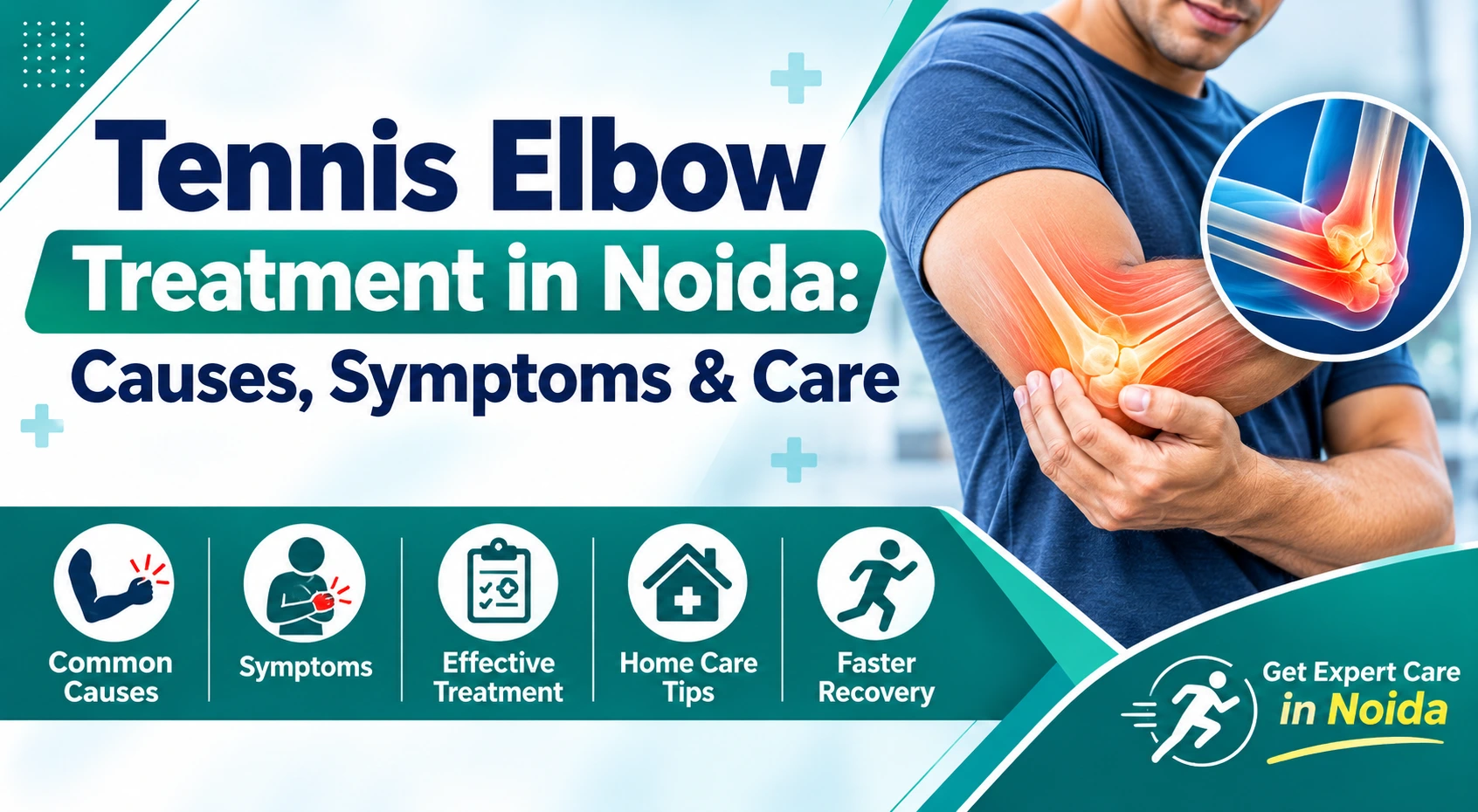
Tennis elbow, medically called lateral epicondylitis, is an overuse condition of the tendons that connect the forearm muscles to the bony bump on the outer side of the elbow (the lateral epicondyle). Repeated stress causes tiny tears and degenerative changes in the tendon, mainly the one that lifts the wrist upward. It is most often seen between 30 and 50 years of age and can affect either arm, though the dominant arm is more commonly involved.
Common causes of tennis elbow
- Repetitive gripping and wrist movements: racquet sports such as tennis and badminton, especially with poor technique or an unsuitable grip size.
- Desk work: long hours of mouse and keyboard use with the wrist held in a poor position.
- Manual tasks: painting, carpentry, plumbing, gardening or repeated use of a screwdriver.
- Gym and fitness activity: a sudden increase in weights, pull-ups or heavy gripping exercises without enough recovery time. Read our guide to common gym injuries for more on safe training.
- Everyday household tasks: wringing clothes, lifting heavy bags or cookware repeatedly.
Tennis elbow is one of several overuse problems that build up when the body is not given time to recover. You can read more about the warning signs of sports injuries from overtraining.
Tennis elbow symptoms
Tennis elbow symptoms usually build up gradually over weeks rather than appearing after a single injury. Common features include:
- Pain or a burning sensation on the outer elbow that may travel down the forearm towards the wrist
- Pain when lifting a cup or kettle, turning a doorknob or shaking hands
- Weak grip, or objects slipping from the hand
- Tenderness when pressing on the bony bump on the outer elbow
- Night-time discomfort in more persistent cases
Pain on the inner side of the elbow is a different condition (often called golfer's elbow) and needs separate assessment.
When should you see an orthopaedic doctor?
Consider a consultation if tennis elbow symptoms continue beyond one to two weeks despite rest, disturb your sleep or work, or are accompanied by numbness, tingling, swelling or fever. You should also seek medical advice after a significant injury or if you cannot straighten the elbow. Neck pain with arm tingling may point to a nerve problem in the neck rather than the elbow. If an injury is simply not settling, these signs that a sports injury needs a specialist may help you decide.
How is tennis elbow diagnosed?
Diagnosis is mainly clinical. The doctor examines the elbow, checks for tenderness and performs simple resisted wrist movement tests. An X-ray may be advised to rule out other causes, and an ultrasound or MRI is used only when the diagnosis is unclear or the problem has been present for a long time.
Because elbow pain can have several causes, including joint pain conditions and nerve-related problems, a proper clinical examination is important before starting any treatment.
Tennis elbow treatment: non-surgical options
Most people improve without surgery, although recovery can take weeks to several months. The plan is individualised, and results vary from person to person.
- Activity modification: reduce or change the movements that trigger pain, rather than stopping all use of the arm.
- Cold application: may help to settle pain after activity.
- Medicines: short-term pain relief, taken only as advised by your doctor.
- Counterforce brace or strap: worn just below the elbow, it can reduce strain on the tendon during daily tasks.
- Physiotherapy: stretching and gradual strengthening exercises form the core of recovery. Structured orthopaedic rehabilitation in Noida can guide the right exercises and progression.
- Ergonomic correction: adjusting desk height, mouse position, tool grips or sports equipment.
- Injections and other procedures: options such as corticosteroid injection, platelet-rich plasma (PRP) or shockwave therapy are sometimes discussed. Evidence for these is mixed, and each has its own benefits and risks, so the decision should be made after a detailed discussion with your doctor.
When is surgery considered?
Surgery is not the first step. It may be discussed only if symptoms remain significant after several months (often 6 to 12) of well-followed non-surgical tennis elbow treatment and daily activities are still affected. The procedure involves removing the damaged part of the tendon and can be done through an open incision or with arthroscopic (keyhole) techniques, depending on the case. Like any surgery, it carries risks such as infection, stiffness or incomplete pain relief, and a period of rehabilitation follows. You can read about arthroscopy and sports medicine to understand how keyhole surgery works.
Simple self-care and exercises
Begin exercises only after the sharp pain has settled, ideally after learning them from a physiotherapist. Stop if pain increases.
- Wrist extensor stretch: straighten the arm in front of you, palm facing down, and gently bend the wrist downward with the other hand. Hold for 20 to 30 seconds.
- Eccentric wrist strengthening: with a very light weight, slowly lower the wrist from the raised position over three to four seconds.
- Grip exercise: gently squeeze a soft ball or rolled towel for a few seconds and release.
Prevention tips
- Warm up before sports and increase training load gradually
- Check your racquet grip size and technique with a coach
- Keep your wrist in a neutral position while typing or using a mouse
- Take short breaks every 30 to 45 minutes during repetitive work
- Use both hands or larger muscle groups when lifting heavy objects
Frequently asked questions
Can tennis elbow heal on its own?
Many cases improve gradually with time and by reducing the activities that overload the tendon. However, if pain persists or keeps returning, a medical assessment is advisable.
How long does recovery take?
Recovery varies with the severity, how long the problem has been present, and how well activity changes and exercises are followed. Milder cases may settle in weeks, while others take several months.
What are the first tennis elbow symptoms to watch for?
Mild pain on the outer elbow during gripping or lifting is usually the earliest sign. Paying attention at this stage and adjusting your activity can help prevent it from worsening.
Is an MRI always needed?
No. Most cases are diagnosed through examination. Imaging is advised only when the diagnosis is uncertain or other conditions need to be ruled out.
Where can I get tennis elbow treatment in Noida?
You can consult an orthopaedic doctor at clinics and hospitals in Noida. Details of Dr. Anuj Jain's clinic and hospital OPDs are given below.
Consult an orthopaedic doctor in Noida
Dr. Anuj Jain, M.B.B.S., M.S. (Orth), D.N.B., MNAMS, is an orthopaedic surgeon who sees patients with elbow, shoulder, knee, hip and sports-related problems. For tennis elbow treatment in Noida, you can book an appointment or call the clinic.
- Clinic, Noida: Dr. Anuj Jain Bone & Joint Clinic, Basement, A-12A, Block A, Sector 50, Noida, UP – 201301 (Tue and Thu 6:00 PM – 8:00 PM; Sat 4:00 PM – 6:00 PM)
- Hospital OPD, Noida: Kailash Hospital & Neuro Institute, NH-1, Sector 71, Noida – 201309 (Mon, Wed and Fri 6:00 PM – 8:00 PM; Sat 11:00 AM – 1:00 PM)
- Phone: +91 88002 17857
Timings may change, so please confirm by phone. You can also book an appointment through the contact page.
Related articles
- Frozen Shoulder: Symptoms, Stages and What Helps
- Sports Injuries from Overtraining: Signs, Prevention & Expert Care
- Most Common Gym Injuries: Prevention & Recovery Guide
- Orthopedic Rehabilitation in Noida
Disclaimer: This article is for general patient education only and is not a substitute for personal medical advice, diagnosis or treatment. Treatment decisions depend on individual examination, and outcomes cannot be guaranteed.

Useful Links
Our Services
Dr. Anuj Jain
 "Being an Orthopaedic Surgeons my aim is restoring mobility and keeping our nation in motion."
Dr. Anuj Jain
M.B.B.S., M.S. (Orth), D.N.B. Gold Medalist